
Related Articles
- Uncharted Frequencies: The Surprising Role of Subcultures in Shaping Global Digital Landscapes
- Wired Whims: The Unexpected Role of Niche Online Communities in Shaping Global Digital Trends
- Fragmented Signals: Exploring the Shadows of Digital Divide in Emerging Economies and Its Impact on Global Unity
- Decoding the Invisible: How Microbial Communication Could Revolutionize Digital Interactions
- Cryptic Channels: How Encrypted Messaging Platforms Are Reshaping Trust and Transparency in Online Interactions
- Mysterious Modes: The Rise of Cryptographic Channels in Secret Online Dialogues and Their Hidden Impacts
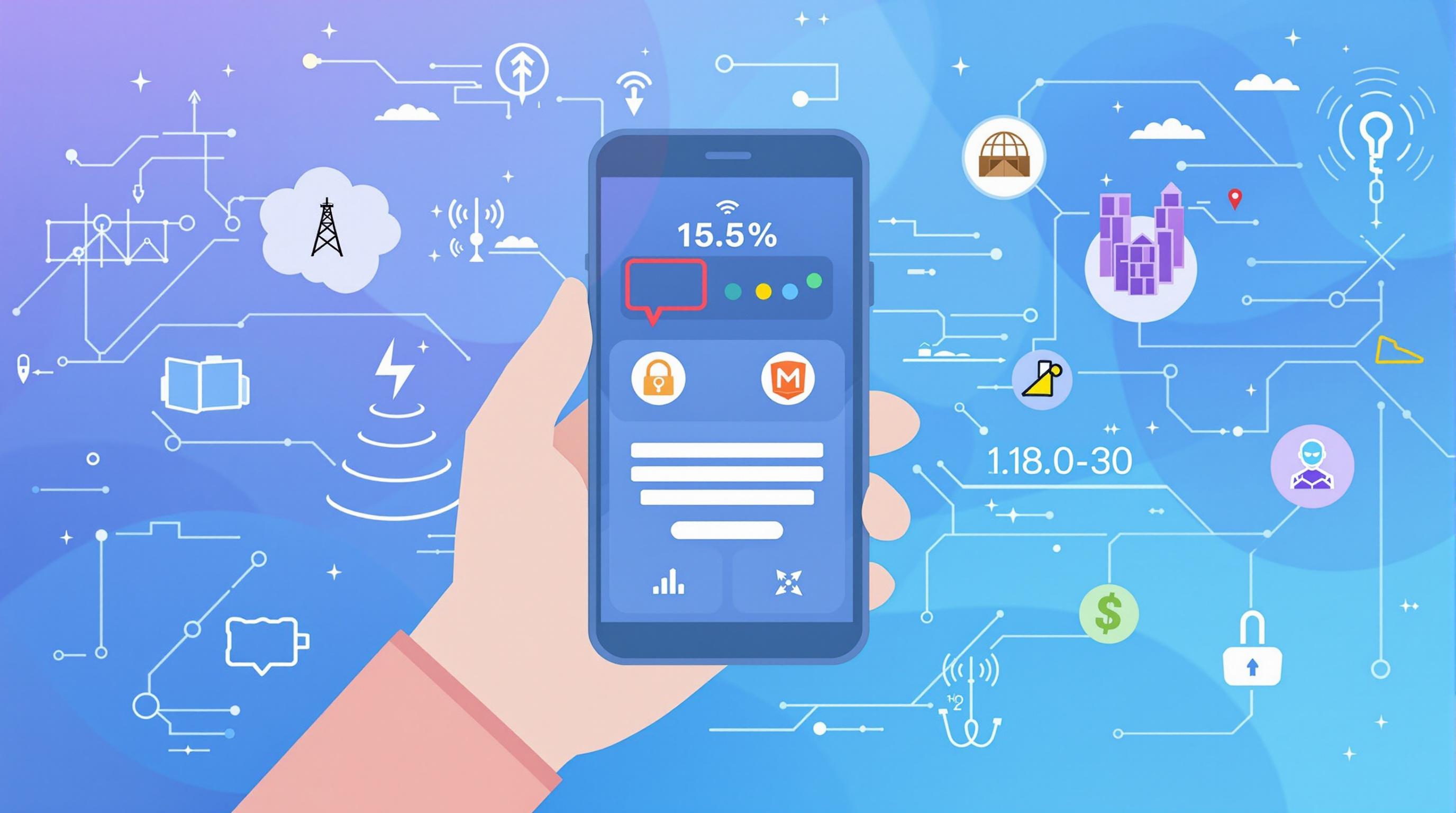
7 Innovative Wireless Technologies Redefining Connectivity in Unlikely Sectors: Insights from Agriculture to Healthcare
7 Innovative Wireless Technologies Redefining Connectivity in Unlikely Sectors: Insights from Agriculture to Healthcare
7 Innovative Wireless Technologies Redefining Connectivity in Unlikely Sectors
The rapid evolution of wireless technologies has dramatically transformed various industries, bringing about a level of connectivity that was once unattainable. From agriculture to healthcare, innovative wireless solutions are reshaping how sectors operate and engage with their stakeholders. In this article, we explore seven such technologies, examining their applications and impact across diverse fields.
Wireless connectivity enhances the capabilities of traditional systems, resulting in streamlined processes and data-driven decision-making. Not only do these technologies improve efficiency, but they also pave the way for sustainable practices and innovative approaches in sectors not typically associated with cutting-edge connectivity. The era of smart solutions is upon us, and these developments may redefine consumer and provider relationships as industries evolve.
As we delve into each sector, we will highlight key technologies that are making significant inroads and provide insights into their transformative potential. Let’s explore how wireless innovation is fostering new opportunities in areas where it was least expected.
Agriculture: IoT-Enabled Precision Farming
The agricultural sector is experiencing a revolution driven by the Internet of Things (IoT). Connected devices and sensors are now capable of monitoring soil conditions, weather patterns, and crop health in real-time. These innovations enable farmers to make informed decisions, enhancing yield efficiency and resource management. The ability to gather and analyze data instantaneously results in far more precise farming techniques.
Wireless technologies such as Low Power Wide Area Network (LPWAN) are essential in rural areas where traditional connectivity options are limited. Solutions like Sigfox and LoRaWAN facilitate the communication between devices over long distances, ensuring farmers can keep track of their operations. This not only improves productivity but also promotes sustainable farming practices by minimizing waste.
Research indicates that IoT applications in agriculture could increase crop yields by up to 20% while reducing water usage by 15% (Source: McKinsey & Company). As wireless solutions continue to advance, their role in agriculture will only grow, ushering in a new era of smart farming.
Transportation: Autonomous Vehicle Networks
The transportation industry is rapidly adopting wireless technologies to enhance the functionality of autonomous vehicles. With vehicles increasingly equipped with advanced connectivity systems, they can communicate with each other and the surrounding infrastructure. This inter-vehicle communication enhances safety, efficiency, and traffic management on busy roads.
Wireless networks, including Dedicated Short Range Communications (DSRC) and Cellular Vehicle-to-Everything (C-V2X), are pivotal for real-time communication. These technologies help in reducing accidents, improving traffic flow, and enabling smarter navigation systems. As autonomous vehicles become more common, the demand for reliable and high-speed wireless connectivity will be paramount.
Statistically, the integration of wireless technology in transportation is expected to lead to a 90% reduction in fatal accidents, creating safer urban environments (Source: National Highway Traffic Safety Administration). The advancements in this sector represent a significant leap forward towards fully autonomous transportation systems.
Healthcare: Remote Patient Monitoring
Wireless technologies are revolutionizing the healthcare sector by enabling remote patient monitoring (RPM). With wearable devices and IoT-enabled health monitors, patients can be observed in real-time, allowing physicians to track vital signs and health metrics from afar. This connectivity fosters proactive healthcare management and enhances patient outcomes.
Technologies like Bluetooth and Wi-Fi facilitate seamless data transmission between devices and healthcare systems. This eliminates the need for patients to visit healthcare facilities frequently, significantly improving their convenience and comfort while simultaneously reducing the burden on healthcare systems. Remote monitoring is especially beneficial in chronic disease management and elderly care.
A study revealed that RPM can decrease the need for urgent care visits by approximately 25% (Source: American Journal of Managed Care). As wireless healthcare technologies advance, the potential for personalized, responsive care will likely outweigh traditional practices, ultimately leading to a more efficient system.
Education: Enhanced Learning Environments
Wireless technologies are transforming educational environments by making learning more engaging and interactive. From wireless internet access to advanced multimedia tools, educators can create dynamic classrooms that accommodate diverse learning styles. This connectivity ensures that both teachers and students can access vast resources beyond the traditional textbook.
Technologies such as Wi-Fi and educational applications foster collaborative and personalized learning experiences. Smartphone and tablet integration allows students to engage in interactive lessons, drawing them into the learning process. Moreover, virtual and augmented reality applications are made possible through robust wireless networks, offering innovative ways to teach complex subjects.
According to recent studies, connectivity improvements in education can lead to a 30% increase in student engagement and overall performance (Source: Harvard Graduate School of Education). As wireless education technologies continue to develop, their influence on teaching and learning will expand, ushering in a new era of educational excellence.
Retail: Smart Inventory Management
In the retail sector, wireless technologies are redefining how inventory is managed and monitored. IoT sensors and RFID tags provide retailers with the ability to track products in real-time, ensuring efficient replenishment and management of stock. Such systems allow stores to reduce losses, maximize sales opportunities, and improve customer satisfaction.
Wireless network technologies enable these smart inventory solutions to function effectively across diverse retail environments. By integrating mobile point-of-sale (mPOS) systems and analytics tools, retailers can optimize their product offerings based on real-time data insights. These advancements significantly enhance the overall shopping experience for consumers.
Research indicates that implementing smart inventory systems can decrease stockouts by 50%, leading to increased customer retention and sales (Source: National Retail Federation). As retailers embrace these connected systems, wireless technologies will continue to play an integral role in transforming the retail landscape.
Smart Cities: Infrastructure Connectivity
The concept of smart cities hinges on the development of connected infrastructure, which is facilitated by innovative wireless technologies. Smart streetlights, traffic sensors, and waste management systems leverage IoT solutions to optimize urban living. These advancements increase efficiency and enhance the quality of life for residents.
Wireless communications, including 5G networks, provide the backbone for the data collection and analysis necessary to implement smart city initiatives. Real-time data enables city planners and managers to understand patterns, mitigate traffic congestion, and respond to emergencies more effectively. This results in not only improved city management but also a sustainable urban environment.
According to a report by the World Economic Forum, smart city technologies could reduce energy consumption by up to 30% while improving urban mobility (Source: World Economic Forum). As cities continue to grow, the role of wireless technology in managing urban infrastructure will be increasingly essential.
Energy: Remote Monitoring of Energy Grids
Wireless technologies are revolutionizing the energy sector by enabling remote monitoring and management of energy grids. Smart meters and IoT sensors provide utilities with real-time data on energy consumption and grid performance. This fosters resilience and efficiency in energy distribution, allowing for quick responses to outages and faults.
Wireless communications, including cellular and satellite networks, ensure the seamless transmission of crucial data from energy infrastructure. This utilization of advanced technologies improves grid stability and allows for better integration of renewable energy sources, aligning with global sustainability goals. Utility companies are better equipped to predict energy demands while optimizing resource allocation.
The implementation of wireless technologies in energy management can lead to a potential reduction of transmission losses by 15-20% (Source: International Energy Agency). As the energy landscape continues to evolve, the role of wireless innovation in creating smart, sustainable, and efficient grids will be paramount.
Conclusion: The Future of Connectivity Across Industries
The advent of innovative wireless technologies is fundamentally altering the way various industries operate, offering unprecedented levels of connectivity and efficiency. From agriculture to healthcare and beyond, these advancements are driving productivity, enhancing customer experiences, and paving the way for sustainable practices. As sectors increasingly adopt these technologies, the benefits will compound, leading to innovative solutions for longstanding challenges.
Moreover, the cross-pollination of ideas across industries facilitates a collective leap forward, creating new opportunities and shaping a future where connectivity knows no bounds. It’s crucial for businesses across all sectors to embrace these innovations to remain competitive and responsive to rapidly changing market conditions.
As we look towards the horizon, it’s evident that the potential of wireless technologies to transform unlikely sectors is immense. Their continued development promises to unlock new capabilities and efficiencies, inspiring a generation of innovations that will redefine how we connect, communicate, and collaborate in the years to come.
Read More