
Related Articles
- Uncharted Frequencies: The Surprising Role of Subcultures in Shaping Global Digital Landscapes
- Wired Whims: The Unexpected Role of Niche Online Communities in Shaping Global Digital Trends
- Fragmented Signals: Exploring the Shadows of Digital Divide in Emerging Economies and Its Impact on Global Unity
- Decoding the Invisible: How Microbial Communication Could Revolutionize Digital Interactions
- Cryptic Channels: How Encrypted Messaging Platforms Are Reshaping Trust and Transparency in Online Interactions
- Mysterious Modes: The Rise of Cryptographic Channels in Secret Online Dialogues and Their Hidden Impacts
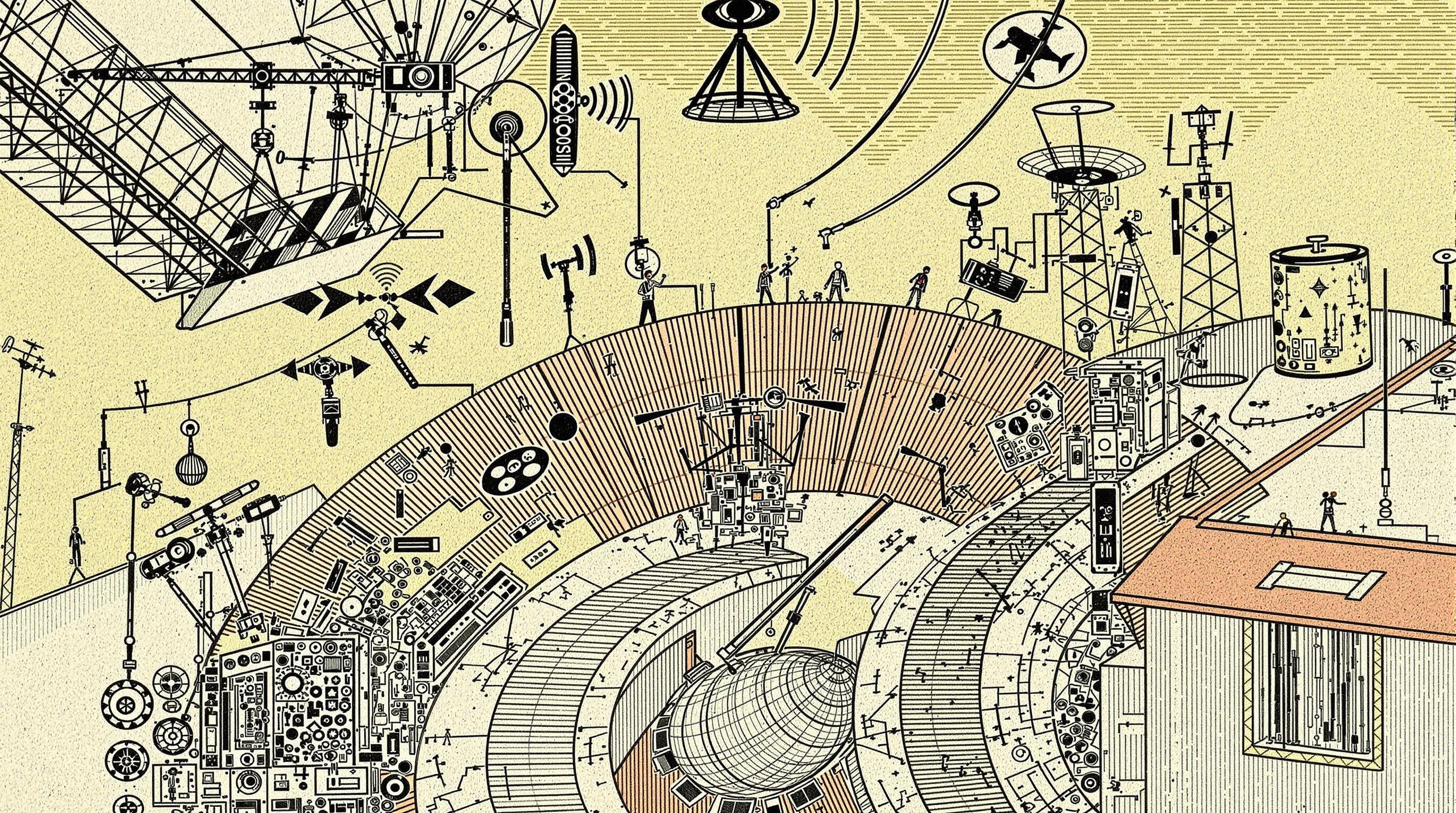
Echoes of the Past: How Antique Inventions Are Shaping Future Wireless Communication Paradigms
Echoes of the Past: How Antique Inventions Are Shaping Future Wireless Communication Paradigms
Antique inventions hold the key to shaping future wireless communication paradigms by revealing the evolution of technology and its principles. By examining the innovations of the past, we can draw parallels that inform and inspire the next generation of wireless solutions.
The Forgotten Genius: Nikola Tesla's Wireless Vision
Imagine a world buzzing with the energy of wireless communication that transcends borders and empowers individuals. Nikola Tesla, a pioneer of electricity and wireless technology, dreamed of such a reality in the late 19th century. In 1893, he demonstrated wireless transmission of energy at the World’s Columbian Exposition, challenging the very boundaries of communication.
What is astonishing is that Tesla's experiments with alternating current (AC) laid the groundwork for wireless transmissions we take for granted today. His work inspired the development of radio technology, paving the way for various modern communication systems. If Tesla were alive today, he would likely be thrilled by the potential our burgeoning 5G networks hold for global interconnectivity.
Wireless Wonders of the Past
Before diving into how these inventions shape modern communication, let’s take a trip down memory lane. The telegraph, one of the earliest forms of long-distance communication, transformed how people exchanged information, shrinking the vastness of time and space. By 1866, undersea cables connected continents, enabling transatlantic messages in mere minutes—a revolutionary feat that was the precursor to today’s fiber-optic cables.
Fast forward to the invention of the radio in the late 1890s by Guglielmo Marconi, who ignited the wireless revolution. This allowed information to traverse airwaves, introducing new possibilities for communication. As a teenager, I marveled at the simplicity of those early radios while attempting to assemble my own with a tin can and some copper wire steps that often ended in a shocked experience.
A Lesson in Simplicity
Sometimes, the simplest ideas can lead to groundbreaking innovations. The basic concept of wireless communication was born from the need to communicate without physical connections. As we continue to expand wireless technologies, it’s essential to remember the roots of simplicity that characterize many of history's greatest inventions.
For example, consider the humble crystal radio. These devices, which required no external power source and operated entirely on radio waves, remind us of the efficiency of minimizing resources while optimizing technology. They hold lessons for today’s engineers as they seek to innovatively reduce energy consumption—a crucial factor in sustainable technology’s future.
The Case for Learning from the Past
A recent study by the World Economic Forum reported that 90% of electronic waste comes from devices that are not designed for reusability or sustainability (WEF, 2022). By revisiting the ingenious designs of early wireless devices that aimed for longevity and sustainability, we might discover principles that could guide us to develop communication technologies that not only innovate but also resonate with sustainable practices.
Take the exercise of repurposing the mechanical principles of the telegraph into modern digital pathways. This rerouting might seem absurd at first, but the act of studying past methodologies can spark imagination and inform future design—essentially creating a bridge between antiquity and modernity.
The Ripple Effect of Technological Advancements
Advancements in wireless communication are often accompanied by a ripple effect. One invention spurs another, leading to unexpected applications. For instance, the introduction of Wi-Fi technology was a game changer for both personal and business communication. In 1997, the IEEE 802.11 standard was introduced, marking a new era of connectivity.
Moreover, the emergence of mobile phones has transformed the landscape. The first mobile call was made in 1973, but it wasn’t until the late 1990s that mobile technology became commonplace, setting the stage for ubiquitous communication. Today, we can speak to someone on the other side of the world without batting an eyelash, all thanks to the interconnected web of inventions that built upon one another through time.
Humorous Missteps on the Path to Innovation
Now, let’s take a humorous detour. One of the more obscure inventions from history is the “tea kettle” wireless telegraph, proposed in 1928. The inventor believed that boiling water would allow for successful transmission of messages through sound waves. He failed to become a household name, but his folly serves as a reminder that not every idea is gold—a critical lesson for today’s innovators stripping down antiquity to derive better solutions!
Pioneer Case Study: The Development of Early Radio
Another fascinating example is the evolution of radio technology through global wars. Initially, military applications drove innovations that then spilled over into civilian life. For instance, the US military utilized frequency modulation (FM) for clear communications, which then transitioned into commercial broadcasting in the 1930s.
This legacy is not just a historical footnote but highlights how necessity births invention. As we stand at the crossroads of 6G technology, we should glean insights from these historical transitions for smoother integrations and real-world applications.
The Role of Education in Preservation and Innovation
You might wonder: how do we ensure that these lessons from the past don’t fade into obscurity? One solution lies in education. By incorporating historical technological studies into engineering and design curriculums, we empower future innovators to learn from their predecessors. This historical knowledge can fuel their creativity and lead to breakthroughs in wireless technologies.
Moreover, educational institutions should promote interdisciplinary approaches that fuse history with modern science. Rather than isolating technological advancement, they should emphasize its evolutionary nature. In a sense, past inventions are the ancestors guiding contemporary experimentation.
Embracing the Future: Where Do We Go from Here?
As we navigate our communication paradigm's uncharted waters, we must remain open to lessons gleaned from the beacon of our past. The rapid development of the Internet of Things (IoT) illustrates both the promise and challenge of our time. The interconnectivity of devices is nothing without learning from the principles established by earlier inventors.
For instance, the simple yet effective principles that governed early wireless technology can guide the design of future IoT frameworks. In exploring how data can be transmitted seamlessly among a network of devices, we can implement the simplicity and efficiency that antiquated devices employed.
The Collective Responsibility of Innovators
Every inventor, engineer, and designer carries the weight of collective history on their shoulders. The contemporary challenges we face concerning cybersecurity and over-reliance on technology compel us to integrate old principles into fresh solutions. Recognizing how past inventions have laid the groundwork is critical in developing robust, dynamic future systems.
As an 18-year-old aspiring engineer, I’m constantly amazed by the possibilities we have ahead of us. However, it’s essential to remember that as we soar into future innovations, the echoes of the past continue to resonate, guiding us onward.
The Future is Bright—and Connected
Ultimately, the future of wireless communication lies in finding harmony between innovation and the wisdom that history offers. The landscapes of communication technologies are expanding rapidly, but the principles that govern them still echo back to those early pioneers who laid the groundwork. By acknowledging and learning from the past, we can envision a brighter, more connected future—one that honors the ingenuity of those who paved the way before us.
So, the next time you pick up your smartphone or connect to Wi-Fi, give a nod to the inventors of yore who ignited this dazzling journey of communication—our journey into the future!
Read More