Related Articles
- Uncharted Frequencies: The Surprising Role of Subcultures in Shaping Global Digital Landscapes
- Wired Whims: The Unexpected Role of Niche Online Communities in Shaping Global Digital Trends
- Fragmented Signals: Exploring the Shadows of Digital Divide in Emerging Economies and Its Impact on Global Unity
- Decoding the Invisible: How Microbial Communication Could Revolutionize Digital Interactions
- Cryptic Channels: How Encrypted Messaging Platforms Are Reshaping Trust and Transparency in Online Interactions
- Mysterious Modes: The Rise of Cryptographic Channels in Secret Online Dialogues and Their Hidden Impacts

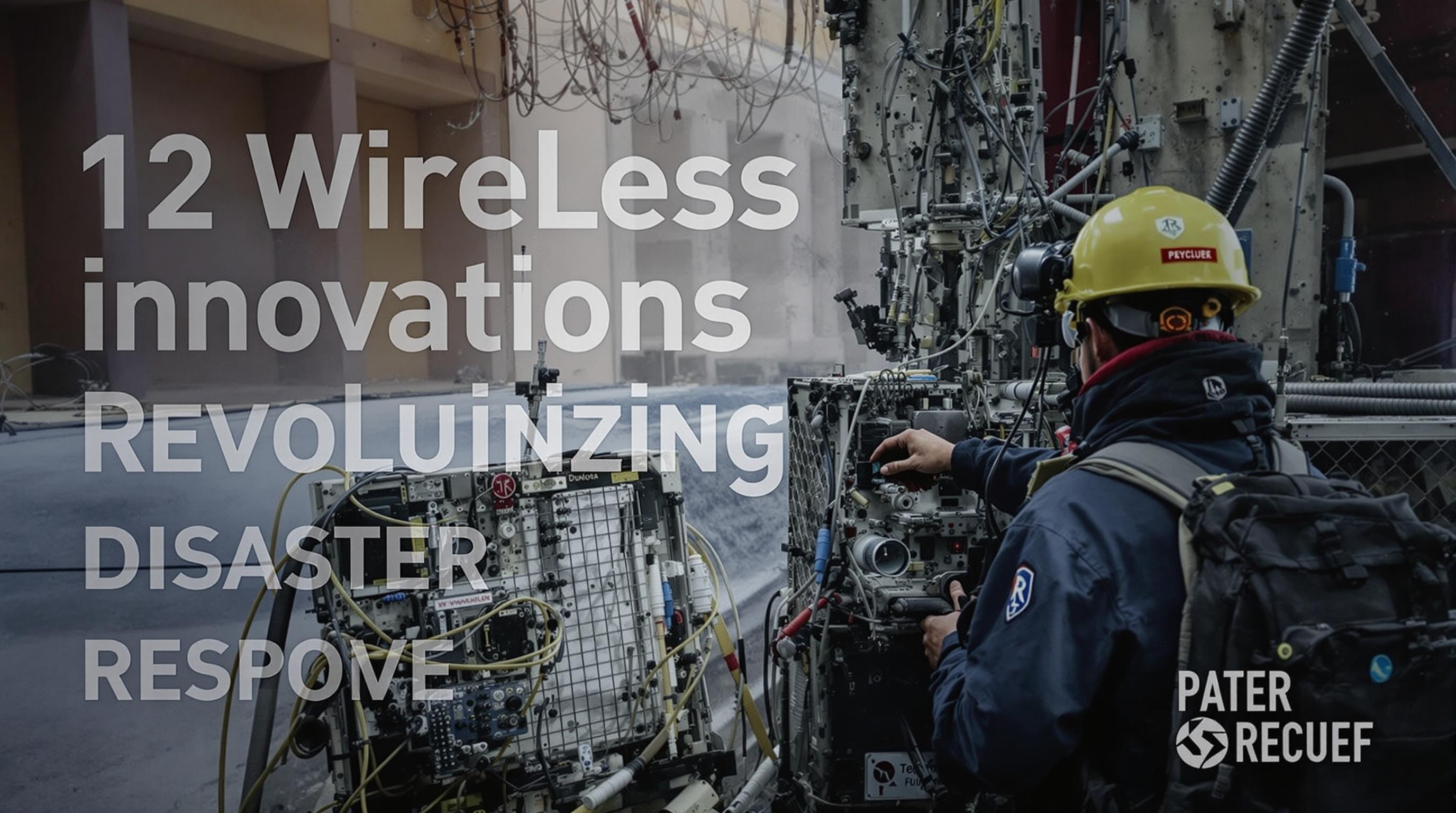
8 Hidden Wireless Innovations Revolutionizing Disaster Response: Pioneering Resilience through Connection and Recovery
8 Hidden Wireless Innovations Revolutionizing Disaster Response: Pioneering Resilience through Connection and Recovery
8 Hidden Wireless Innovations Revolutionizing Disaster Response
In the face of increasing natural disasters fueled by climate change and urbanization, advancements in technology have emerged as pivotal forces in enhancing disaster response efforts. Behind the scenes, numerous wireless innovations are being developed and implemented to ensure faster recovery, improved communication, and resilient infrastructures. This article highlights eight such innovations that play a crucial role in transforming disaster management and recovery processes, ultimately saving lives and reducing economic damages.
Effective disaster response relies heavily on rapid communication, accurate information dissemination, and efficient resource allocation. Wireless technologies have revolutionized these aspects, allowing responders, organizations, and communities to stay connected even in chaotic environments. By integrating various wireless solutions into emergency management strategies, communities can build resilience against future disasters, turning what was once a reactive approach into a proactive plan.
Understanding these hidden innovations can empower stakeholders to invest in new technologies and retrain personnel to ensure preparedness. As we delve deeper into each of these innovations, we will uncover the ways they enhance response capabilities and foster stronger community ties during critical times.
1. Mesh Networks: Strengthening Connectivity in Crisis Zones
When traditional communication infrastructure fails following a disaster, mesh networks emerge as an invaluable resource. These networks allow devices to connect directly with each other, creating a decentralized communication system that remains operational even when central hubs are damaged. By leveraging existing devices like smartphones and tablets, mesh networks extend connectivity across vast areas.
In case studies of recent disasters, such as hurricanes and earthquakes, mesh networks facilitated seamless communication between first responders, disaster management teams, and affected citizens. This was critical for disseminating timely information regarding safety protocols and resource availability. Various platforms, such as FireChat and Serval Project, have showcased the effectiveness of this technology in maintaining vital connections.
Additionally, the ability of mesh networks to adapt and expand during an incident ensures that they can accommodate the dynamic needs of emergency responders. This adaptability allows for better coordination, which increases the overall effectiveness of disaster response efforts.
2. Drones: Aerial Assessments and Delivering Aid
Drones, or unmanned aerial vehicles (UAVs), have gained traction as an essential tool in disaster response. They can quickly survey affected areas, capturing real-time images that aid in assessing damage and identifying priority zones for assistance. This aerial perspective streamlines decision-making processes for emergency management teams.
Equipped with advanced sensors and cameras, drones are capable of performing tasks such as locating missing individuals and delivering medical supplies or food to isolated communities. For instance, after the 2015 earthquake in Nepal, drones were deployed to evaluate collapsed buildings and facilitate recovery efforts, significantly speeding up the response.
The integration of drones into disaster response systems enables a more proactive approach, allowing teams to deploy resources where they are most needed. Furthermore, with enhancements in battery life and payload capacity, the capabilities of drones in emergency scenarios are continuously expanding.
3. Internet of Things (IoT): Real-Time Monitoring and Alerts
The Internet of Things (IoT) has introduced a plethora of connected devices that enhance disaster preparedness and response. Smart sensors, for example, can monitor environmental conditions, infrastructure health, and population density, providing crucial data to emergency management agencies. These devices gather and transmit information in real-time, facilitating quick decision-making.
During disaster events, IoT-enabled systems can issue alerts to communities, informing them of impending threats such as floods, wildfires, or severe storms. A prime example is the work done by the Early Warning System for Tsunamis, which uses IoT technology to analyze seismic activity and deliver rapid alerts to populations at risk.
The ability of IoT devices to communicate with each other creates a comprehensive situational awareness for first responders, leading to better coordinated and more effective response efforts. As technology continues to evolve, the role of IoT in disaster management will only expand, further enhancing resilience.
4. Satellite Communication: Uninterrupted Connectivity
During major disasters, terrestrial communication systems may become unreliable or fail entirely. Satellite communication systems bridge this gap by providing an independent means of transmitting data and voice communications. This technology has been instrumental in maintaining connectivity for emergency responders and affected communities during crises.
Satellites can provide coverage over wide areas, which is particularly beneficial in rural or underserved locations where traditional infrastructure is lacking. Initiatives by organizations like Inmarsat have highlighted the importance of satellite communication for humanitarian responses and recovery efforts following catastrophic events like typhoons and earthquakes.
Moreover, the advent of small satellites has made this technology more accessible and affordable. Organizations can deploy satellite communication to support logistics operations, coordinate resources, and maintain communication among various response teams, ultimately improving their chances of saving lives.
5. Wearable Technology: Enhancing First Responder Safety
Wearable technologies, such as smartwatches and health-monitoring devices, are changing how first responders operate in disaster scenarios. These devices provide essential biometric information about personnel, enabling real-time monitoring of their health status during crises. This data can help ensure that responders are capable of performing their duties effectively and safely.
In addition to monitoring health metrics, wearables can be integrated with GPS technology to track the movements of personnel in hazardous environments. This capability allows command centers to manage resources better, ensuring that teams remain safe and are supported as they navigate complex disaster sites.
Wearable technologies also facilitate communication among responders. Some devices come equipped with functionality to send urgent alerts based on health metrics or environmental conditions, enabling immediate support in emergencies. The adoption of wearables in disaster response fundamentally enhances situational awareness and reinforces safety measures for those on the front lines.
6. Mobile Applications: Empowering Communities
Mobile applications have become indispensable tools in disaster response and recovery. A myriad of apps provides users with crucial information about preparedness, risks, and available resources. For instance, FEMA's app offers real-time alerts about emergencies, as well as tips for developing family preparedness plans.
Furthermore, applications like CrowdMap and Good Samaritans allow for community engagement by enabling citizens to report their needs and offer help. This grassroots approach fosters a spirit of collaboration and enhances the overall resilience of communities during disasters.
Mobile apps also serve as platforms for facilitating donations and volunteer efforts, further amplifying community support. As user-friendly interfaces become more common and smartphone adoption increases, these applications play a larger role in mobilizing resources and connecting communities during times of need.
7. Social Media: A Lifeline for Communication
Social media has emerged as a dual-purpose tool in disaster response, serving both as a communication platform and a source of critical information. During disasters, social media channels enable organizations and agencies to quickly disseminate updates and emergency alerts to the public, fostering awareness and preparation.
Moreover, social media facilitates real-time communication among affected individuals, disaster response teams, and the general population. By using hashtags and locations, people can share firsthand accounts of the situation, which can assist responders in assessing needs and prioritizing their efforts.
The collaboration between various actors—government agencies, NGOs, and local communities—on social media platforms can amplify outreach and engagement. For instance, Twitter has been instrumental in sharing urgent messages during events like wildfires and floods, benefitting from its immediacy and global reach.
8. Blockchain Technology: Ensuring Transparency and Efficiency
Blockchain technology, while often associated with cryptocurrencies, is garnering attention for its potential applications in disaster response and recovery. By providing a decentralized and tamper-proof ledger of transactions, blockchain can improve the efficiency of resource allocation and funding disbursement in disaster management.
In emergency scenarios, using blockchain enables organizations to track donations transparently, ensuring that funds reach those in need without unnecessary bureaucracy. Initiatives like the “Block Aid” project have shown how blockchain can be harnessed for trustworthy and accountable aid distribution.
As technology evolves, remote verification and digital identity solutions enabled by blockchain will further reinforce the integrity of disaster response efforts. By addressing issues of accountability and traceability, blockchain helps in maintaining public trust and encouraging continued support for recovery efforts.
Conclusion
The innovations highlighted in this article demonstrate the profound impact of wireless technology in revolutionizing disaster response. By leveraging mesh networks, drones, IoT, satellite communication, wearable technology, mobile applications, social media, and blockchain, communities become more resilient in the face of adversity. Each innovation contributes to a holistic approach to disaster management that prioritizes communication, safety, and efficiency.
As these technologies continue to advance, and as communities increasingly adopt them, the potential for saving lives and reducing the impact of disasters will only grow. Investing in research and training related to these innovations will ensure that individuals and organizations are well-equipped to respond effectively when disasters strike.
Ultimately, fostering a culture of preparedness and enhancing connectivity will empower communities to not only withstand challenges but to thrive in a rapidly changing world.
Read More