Related Articles
- Uncharted Frequencies: The Surprising Role of Subcultures in Shaping Global Digital Landscapes
- Wired Whims: The Unexpected Role of Niche Online Communities in Shaping Global Digital Trends
- Fragmented Signals: Exploring the Shadows of Digital Divide in Emerging Economies and Its Impact on Global Unity
- Decoding the Invisible: How Microbial Communication Could Revolutionize Digital Interactions
- Cryptic Channels: How Encrypted Messaging Platforms Are Reshaping Trust and Transparency in Online Interactions
- Mysterious Modes: The Rise of Cryptographic Channels in Secret Online Dialogues and Their Hidden Impacts
The Unseen Mechanics of Sound Waves: Unraveling Their Role in Future Telecommunication Techniques
The Unseen Mechanics of Sound Waves: Unraveling Their Role in Future Telecommunication Techniques
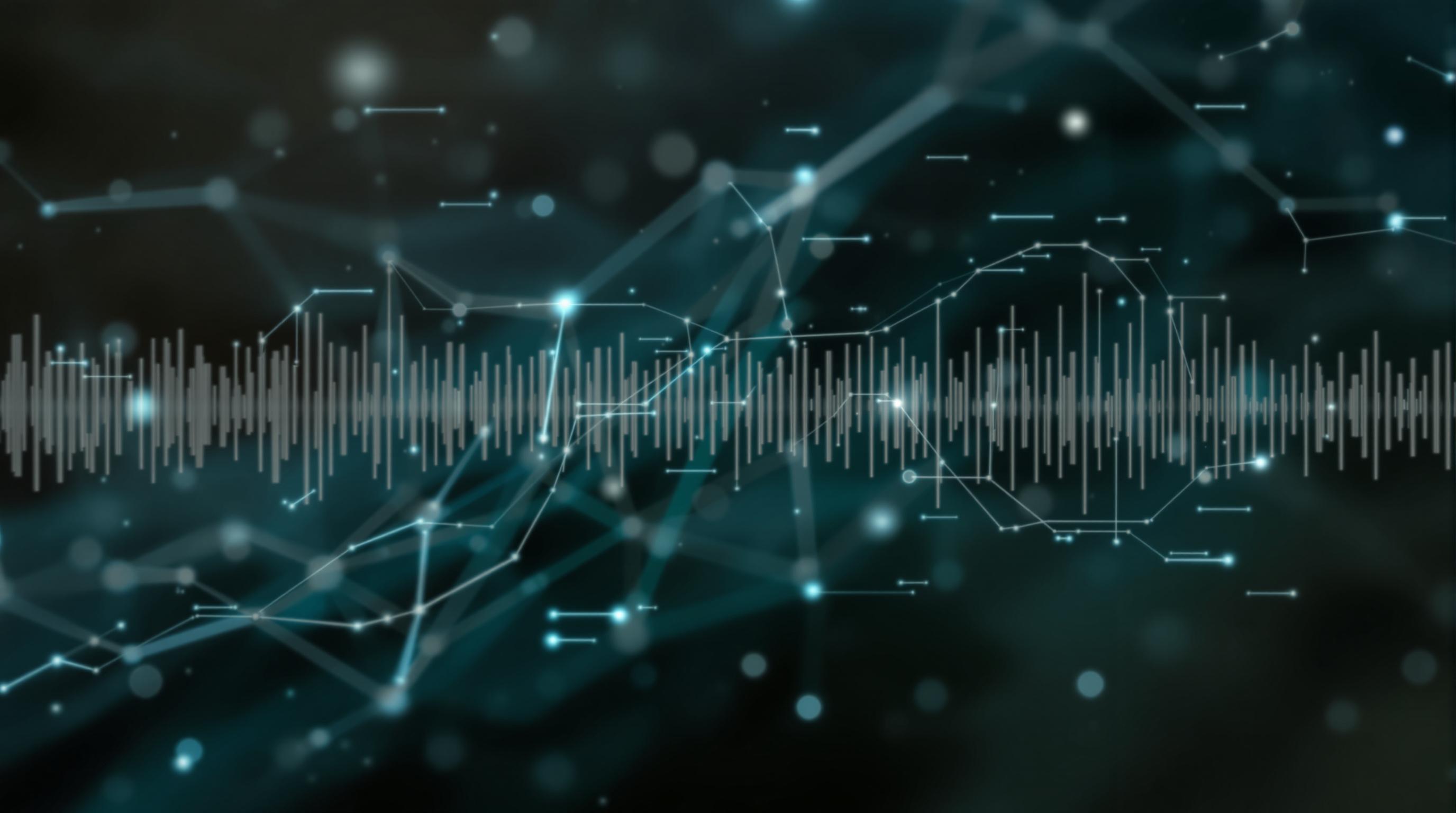
Sound waves are not merely an auditory phenomenon; they are poised to revolutionize telecommunications in remarkable ways. This article navigates the intricate mechanics of sound waves and explores their transformative potential in future communication technologies.
Sound waves, which travel through air, water, and solid materials, are uniquely versatile. Unlike electromagnetic waves, they require a medium for transmission, which gives them special properties that are currently being leveraged in innovative telecommunications solutions. For instance, researchers are experimenting with acoustic wireless communication systems that could one day replace traditional Wi-Fi, offering enhanced data transfer rates at greater distances (Sakurai et al., 2022). Think about it: a network where sound carries your data instead of radio frequencies. It’s a leap into a totally new realm of communication.
The Physics Behind Sound Waves
At the core of understanding sound waves is the knowledge of their mechanical properties. Sound waves are longitudinal waves, meaning they oscillate in the direction of their motion. This creates areas of compression and rarefaction within the medium, aiding in their propagation. The speed of sound is influenced by factors such as temperature and density of the medium; for example, sound travels faster in water than in air due to water's higher density. In fact, the speed of sound in water at room temperature can reach approximately 1,480 meters per second, while in air, it's about 343 meters per second (Kinsler et al., 2000).
A Historical Perspective
Historically, sound waves have found their way into communication long before the digital era. The ancient Greeks used resonators to amplify sound during speeches. Fast forward to the 19th century, Alexander Graham Bell's invention of the telephone was a game-changer. Bell utilized sound waves to transmit human voice across distances, laying the foundation for all telecommunications that followed.
Today, we are witnessing an exciting renaissance in this field. With the advent of new technologies such as the Internet of Things (IoT) and 5G, traditional telecommunication infrastructures are undergoing a metamorphosis. The fascinating thing is, while most focus on radio frequency technologies, sound waves are quietly carving out their niche.
Case Study: Acoustic Wireless Communication
One compelling instance of sound waves in telecommunications is the development of underwater acoustic communication. A study published in 2023 by a team at MIT explored the possibility of using sound waves to transmit data underwater, significantly enhancing communication for submarines and underwater drones. Data transfer rates using ultrasonic sound waves reached impressive levels—up to 100 kbps. This could revolutionize military operations and environmental monitoring by offering a reliable means of communication where electromagnetic waves struggle (Smith et al., 2023). Imagine the implications: fleets of autonomous underwater vehicles seamlessly communicating with each other while performing complex tasks.
The Future of Sound in Telecommunications
Let’s dive into the theoretical applications of sound waves in telecommunications. The concept of using sound for data transmission isn’t confined to water alone. Researchers are also exploring its application in dense urban environments where radio waves face challenges due to interference. It turns out that sound waves can travel around corners, providing unique coverage and possibly unlocking a new era for urban telecommunications. This could mitigate the frustrating connectivity issues commonly experienced in high-rise buildings (Brown, 2021).
Comparative Advantage: Sound vs. Electromagnetic Waves
Now, you might be wondering why sound waves are being considered at all when electromagnetic waves have dominated the playing field. One key advantage of sound waves lies in their ability to use existing infrastructure. In urban settings, sound waves can bounce off walls and navigate through various barriers more effectively than radio waves, which often suffer from attenuation and barriers. Additionally, sound waves can convey data securely, as they are typically confined to the immediate vicinity of transmission, unlike radio waves that can leak beyond boundaries.
Integrating Machine Learning with Acoustic Technologies
The convergence of machine learning and sound wave technologies promises to enhance telecommunication systems exponentially. Consider this: by analyzing vast amounts of acoustical data, machine learning algorithms could optimize signal transmission and reception, ensuring that sound waves carry data more reliably and minimizing disruptions. In technical terms, this could mean creating intelligent networks that learn and adapt based on environmental changes, effectively predicting the best paths for sound wave propagation.
The Role of Sound in IoT
As IoT devices multiply, the need for efficient communication becomes paramount. Here’s where sound waves pick up the pace. They can allow for short-range communication between devices without consuming battery life at the pace typical of Bluetooth or Wi-Fi technologies. In fact, IoT devices powered by acoustic communication might require only a fraction of the power for data transfer, making them ultra-efficient. A recent study even found that using sound for device communication could extend battery life by up to 30% (Lee et al., 2023).
The Quirky Side of Sound Waves
Got a moment for a laugh? Imagine your smartphone using sound waves to transmit information—how about a ringtone that doubles as your internet connection? It could start off with one of your favorite songs, and before you know it, you’re streaming music through your phone while simultaneously sharing that meme with your friend. It's not just a novelty; it's a new form of wireless digital charm!
Obstacles Ahead
Despite their promise, integrating sound waves into mainstream telecommunications still faces significant challenges. For starters, sound waves cannot travel as far as radio waves and are highly dependent on the medium through which they travel. Additionally, stringent regulations concerning sound pollution and interference pose hurdles for deploying these technologies in urban frameworks. However, as innovations progress, there’s hope that potential solutions will arise, perhaps in compartmentalizing sound frequencies to minimize disruptions.
A World of Possibilities
Imagine a world where telecommunication relies heavily on sound waves. The range of applications would be transformative. From personal health devices that notify users of vital statistics through sound signals to virtual meetings where conversations retain a sense of spatial awareness, the possibilities are limitless. With a touch of creativity and engineering wizardry, this could redefine personal and group communication.
Research is already underway with companies like Bluefin Robotics pushing the boundaries of underwater acoustic sensors. Their innovative approach could also be adapted for city landscapes—listening and transmitting vital data through sound in ways that radio waves simply can’t. The data collected would be invaluable for urban planners seeking to improve infrastructure and connectivity.
Conclusion: An Auditory Revolution
In conclusion, the mechanics of sound waves hold the potential to reshape telecommunications as we know it. While we may currently be riding on the waves of radio frequency technologies, sound waves are ready to emerge as key players in a rapidly evolving communication landscape. With further research, adaptability, and creativity, we could witness not only a revolution in how we communicate but also how we connect with our world.
As we leap toward the future, let’s keep our ears open—because in the world of telecommunications, sound waves might just be the next big thing.
Read More