Related Articles
- Uncharted Frequencies: The Surprising Role of Subcultures in Shaping Global Digital Landscapes
- Wired Whims: The Unexpected Role of Niche Online Communities in Shaping Global Digital Trends
- Fragmented Signals: Exploring the Shadows of Digital Divide in Emerging Economies and Its Impact on Global Unity
- Decoding the Invisible: How Microbial Communication Could Revolutionize Digital Interactions
- Cryptic Channels: How Encrypted Messaging Platforms Are Reshaping Trust and Transparency in Online Interactions
- Mysterious Modes: The Rise of Cryptographic Channels in Secret Online Dialogues and Their Hidden Impacts
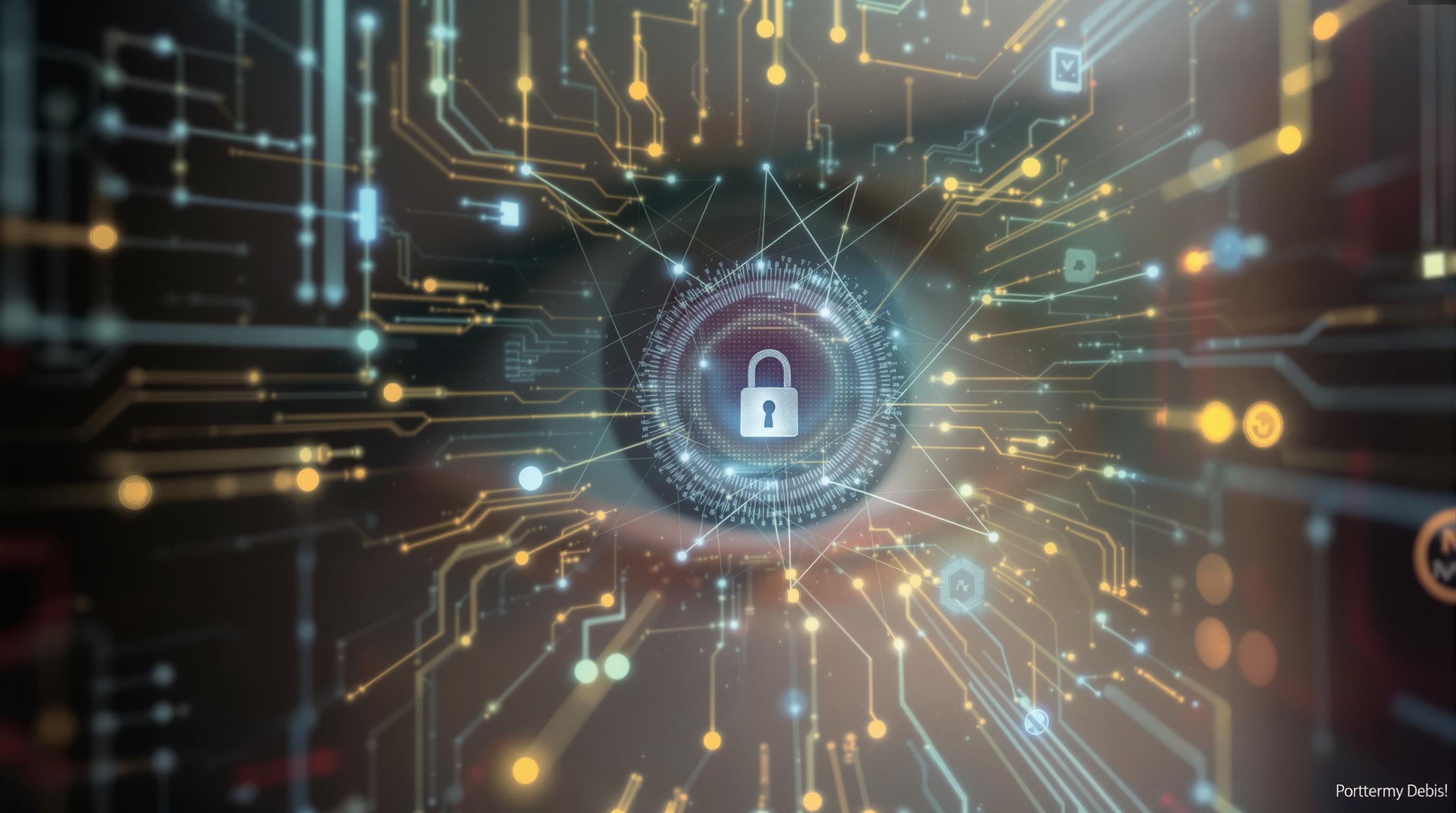
Uncharted Waters: Exploring the Role of Quantum Computing in Tomorrow's Cyber Protection Strategies
Uncharted Waters: Exploring the Role of Quantum Computing in Tomorrow's Cyber Protection Strategies
As we sail into an increasingly digitized world, the role of quantum computing in cybersecurity looms large, promising to revolutionize our protection strategies. This article delves into the uncharted waters of quantum technology, exploring its potential, challenges, and implications for the future of cyber defense.
The Quantum Challenge: A Paradigm Shift in Cybersecurity
In traditional computing, information is processed using bits, the fundamental unit of data that can either be a 0 or a 1. But quantum computing turns this idea on its head, leveraging the principles of quantum mechanics. Here, quantum bits or "qubits" can exist in multiple states simultaneously, allowing for far more complex data processing. This quirk of quantum physics could dramatically enhance cryptography, potentially allowing for secure communications systems that are virtually unbreakable.
A Brief History of Quantum Computing
While quantum computing may sound like something out of a science fiction novel, its roots trace back to the early 1980s with pioneering work by physicist Richard Feynman. He proposed that classical computers struggled to simulate quantum systems, paving the way for the thought that a new type of computer was needed. Fast forward to the late 1990s, and we see the advent of quantum algorithms such as Shor's and Grover's, which exposed potential vulnerabilities in widely-used encryption methods.
The Race Against Time
According to a report by the Cybersecurity and Infrastructure Security Agency (CISA), as many as 89% of analysts believe that quantum computing poses a credible threat to current cryptographic systems, which rely heavily on factoring large prime numbers. This means that within the next few years, as quantum technologies advance, organizations may find their defenses compromised if they do not adapt. The race is on, and the urgency cannot be overstated.
Cryptography Reimagined
The security protocols that keep our information safe today—RSA and ECC (Elliptic Curve Cryptography)—may be rendered obsolete by quantum algorithms. For instance, Shor’s algorithm can factor large numbers exponentially faster than the best-known classical algorithms. As an example, a 2048-bit RSA key, secure against today’s computing power, could be broken rapidly by a sufficiently powerful quantum computer.
Imagine a world where financial institutions, governments, and healthcare providers are at the mercy of hackers with access to quantum technology—it's a cyber doomsday scenario that keeps cybersecurity experts awake at night.
The Silver Lining: Quantum Key Distribution
But it's not all doom and gloom! In fact, quantum computing opens up opportunities for enhancing cyber protection strategies as well. One of the brightest prospects lies in the development of Quantum Key Distribution (QKD). This technique allows two parties to share a secret key that can be used for secure communication, with the added assurance that any attempt to intercept the key will be detected. Early implementations have already been tested in financial institutions in China, setting the stage for a new era in secure communications.
Real-World Applications: What We’re Seeing Today
Several companies are already making strides toward integrating quantum computing into their cyber strategies. IBM, for example, has been at the forefront of quantum development, launching its Quantum Experience platform that allows researchers and developers to access quantum computers to test cybersecurity applications. In 2020, IBM even introduced quantum-enhanced cryptographic algorithms that provide protection against future quantum attacks.
Meanwhile, Google has demonstrated "quantum supremacy," solving problems that would take classical computers thousands of years amid debates on the ethical implications of quantum's capabilities.
Preparing for the Quantum Era
Despite the exciting prospects, the transition to quantum-safe strategies poses challenges. Organizations must invest now in quantum-resistant algorithms and start transitioning to hybrid security approaches that pair classical and quantum solutions. Researchers estimate it might take several years to create and deploy these new algorithms widely; hence, businesses must act quickly. Furthermore, a survey by Deloitte revealed that 45% of cyber leaders are uncertain how to incorporate quantum technology into their security frameworks. This uncertainty begs the question: Are we ready for a quantum future?
The Human Factor: Skills Gap in Quantum Cybersecurity
If quantum computing is the ship, then skilled professionals are the crew navigating these uncharted waters. Currently, there is a significant shortage of experts who understand both cybersecurity and quantum technology. A report from the World Economic Forum indicates that nearly 50% of organizations struggle to find talent capable of managing emerging technologies like quantum computing. This gap could severely hinder cybersecurity advancements, making it critical to invest in education and training.
A Call to Action
Now is the time for stakeholders in academia, government, and industry to collaborate. By fostering a quantum-ready workforce and engaging in proactive policy-making, we can build safeguards against potential threats. The more educated and prepared we are now, the better we'll fare in this new digital age. Consider what happened with Y2K; society was caught off guard, and while the scare proved to be relatively minor, it highlighted vulnerabilities in our reliance on technology. Imagine the chaos had quantum threats emerged without preparation.
The Unintended Consequences
Just like any technological advancement, quantum computing may also lead to ethical and security dilemmas. Take, for instance, the idea of using quantum computing for hacking—it's not just the realm of the good guys anymore! Quantum hacking tools may give malicious actors the power to crack seemingly impenetrable systems, resulting in technology arms races that may outpace our regulatory frameworks.
As a light-hearted analogy, it's like giving kids access to the cookie jar and then being surprised when they raid it! How can we establish boundaries that prevent misuse, and what new regulations stand in the way?
Conclusion: Navigating Our Quantum Future
In this new landscape of quantum computing and cybersecurity, organizations must become proficient navigators, charting a course through turbulent seas. The rewards are immense: personalized, secure digital experiences, enhanced privacy protocols, and protection against burgeoning threats. But the journey will require foresight, collaboration, and preparation. As we move forward, let’s not just be passive participants; let's actively shape the conversation, ensuring our defenses are resilient even in the face of unprecedented change. The future is indeed quantum, and it's time we fully embraced that reality!
Read More