Related Articles
- Uncharted Frequencies: The Surprising Role of Subcultures in Shaping Global Digital Landscapes
- Wired Whims: The Unexpected Role of Niche Online Communities in Shaping Global Digital Trends
- Fragmented Signals: Exploring the Shadows of Digital Divide in Emerging Economies and Its Impact on Global Unity
- Decoding the Invisible: How Microbial Communication Could Revolutionize Digital Interactions
- Cryptic Channels: How Encrypted Messaging Platforms Are Reshaping Trust and Transparency in Online Interactions
- Mysterious Modes: The Rise of Cryptographic Channels in Secret Online Dialogues and Their Hidden Impacts
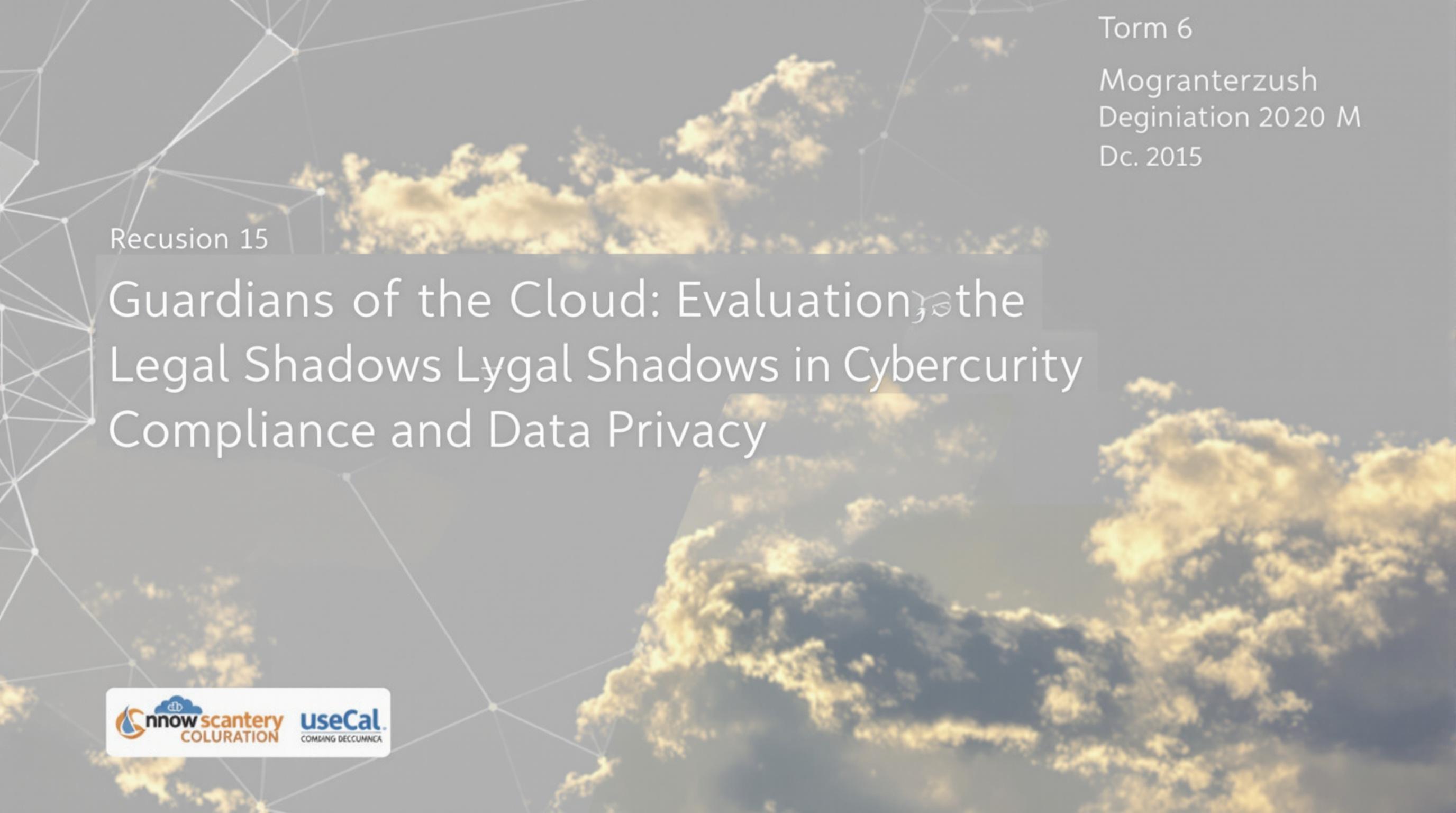
Guardians of the Cloud: Evaluating the Legal Shadows in Cybersecurity Compliance and Data Privacy
Guardians of the Cloud: Evaluating the Legal Shadows in Cybersecurity Compliance and Data Privacy
As our lives increasingly migrate to the digital realm, the landscape of cybersecurity compliance and data privacy emerges as a high-stakes battlefield. This exploration delves into the complexities of legal frameworks, challenges, and the imperative need for effective guardianship in the cloud.
The Cloud: A Double-Edged Sword
“The cloud is like a teenage party; no one knows who’s in charge, and everyone hopes no one gets hurt.” This humorous analogy underscores the chaotic nature of data storage in virtual environments. Everyone—from tech giants to small businesses—has embraced cloud solutions, but few grasp the intricate legal webs that envelop them.
Statistics Speak Volumes
Consider this: In 2022, it was estimated that around 60% of businesses experienced a cybersecurity breach due to poor data handling practices (IBM Security). Yet, it's not just about avoiding breaches; it's about complying with an ever-evolving landscape of regulations. Companies face not only financial repercussions but also damage to their reputations and consumer trust.
Understanding Key Regulations
To navigate the fog of legal shadows, one must comprehend the major regulations affecting cybersecurity and data privacy, including the General Data Protection Regulation (GDPR), the Health Insurance Portability and Accountability Act (HIPAA), and the California Consumer Privacy Act (CCPA). Each regulation creates a framework that companies must follow to protect consumer data, but compliance without savvy implementation can lead to vulnerabilities.
The Guardian: A Mythical Being?
Much like the mythical guardians that protect treasure, organizations must appoint their own “guardians” of data. But who are these guardians? In a business context, they typically include Chief Information Security Officers (CISOs), compliance officers, and even legal teams.
The Cost of Non-Compliance
Failure to comply with cybersecurity regulations can result in severe penalties. For instance, companies that breach GDPR can face fines up to €20 million or 4% of their global annual revenue, whichever is greater. Looking at the big picture, this translates into potential bankruptcy for smaller businesses and tarnished reputations for larger enterprises. Imagine waking up to news that your company has been fined millions, all due to negligence in cybersecurity practices!
Case Study: Target's Data Breach
Take, for example, the infamous Target data breach in 2013, which exposed the personal information of 40 million credit and debit card accounts. The legal fallout was staggering: Target spent $162 million in breach-related costs and faced several lawsuits, leading to a settlement that amounted to $18.5 million across 47 states (NBC News). This incident serves as a stark reminder of the importance of proactive measures in cybersecurity compliance.
Guidelines for Success
So how can organizations become better guardians of the cloud? Here are some actionable recommendations:
- Conduct regular cybersecurity training for employees to keep them informed of emerging threats.
- Invest in cybersecurity insurance to provide a financial safety net.
- Implement multi-factor authentication (MFA) to enhance data security.
- Establish an incident response plan that is tested regularly.
Conversing with Compliance: The Human Element
While regulations are critical, the human element often gets overlooked. Humorously enough, getting employees onboard with cybersecurity policies often requires more finesse than jamming a USB stick into the company’s protected network! A 2023 survey by the Ponemon Institute indicates that 68% of employees don’t know the proper procedures for reporting a cybersecurity incident (Ponemon Institute). Educating your workforce should be as much a priority as implementing firewalls.
The Next Generation of Cyber Guardians
As a 25-year-old writer, I often find myself tethered to the very gadgets that make my life easier, which also expose me to potential risks. For my generation, data breaches feel like a lurking monster under our beds. Yet, with education and mindfulness, we can strengthen our defenses. In 2024, the adoption of cybersecurity courses in high schools is projected to rise by 35%, highlighting a newfound awareness (EdTech Magazine).
Innovation: The Future of Data Privacy
Innovation also plays a pivotal role in compliance. Emerging technologies like artificial intelligence (AI) and blockchain are evolving to protect data privacy. AI can analyze anomalous behavior to detect breaches in real time, while blockchain's decentralized nature can help ensure data integrity and security. Now, isn’t that a slice of futuristic pie?
The Ethical Dilemma
As organizations scramble to comply with regulations, ethical considerations often take a back seat. Think about this—if a company can collect your data, should it? The ethical debate around data collection has intensified, with many consumers demanding more transparency about how their information is used. Hence, businesses must not only comply with legal standards but also align with the moral expectations of their audience. The battle for hearts and minds is just as essential as the legal one.
The Ripple Effect of Data Breaches
A ripple effect occurs when one company experiences a breach—consumers may lose trust in the entire industry. In a recent OXIS Group survey, 72% of respondents next utilized anti-virus software after hearing about high-profile breaches (OXIS Group). This statistic indicates a heightened awareness and measures taken by consumers, but it also reveals a societal pushback against negligence in data management.
Establishing a Culture of Compliance
Creating a culture of compliance isn't an overnight achievement; it’s a marathon, not a sprint. Every employee, from the intern to the CEO, should be actively engaged in ensuring the company upholds data security standards. Including cybersecurity training as part of onboarding ensures everyone starts from the same page—knowledge is power!
A Light at the End of the Tunnel
Despite the hurdles, there is hope. Organizations are beginning to understand that compliance is not just about avoiding penalties; it's about cultivating consumer trust and preparing for a digital tomorrow. According to Gartner, by 2025, 75% of organizations will invest in cybersecurity as part of a broader enterprise risk management strategy, up from just under 50% in 2022 (Gartner). This changing landscape indicates a shift towards proactive rather than reactive measures.
Conclusion: Be the Guardian
In this digital age, the responsibility of safeguarding data falls upon all of us—businesses, consumers, and policymakers. By peeling back the layers of compliance and making informed decisions, we can collectively elevate the standards of cybersecurity. In the end, every guardian of the cloud must be vigilant, ethical, and proactive to ensure that our digital lives remain secure.
So, whether you’re a tech aficionado or just someone who likes to swipe on your smartphone, remember: **the treasures of your data are worth protecting**—be the guardian the cloud needs! / In this swirling tempest of regulations and digital innovation, let’s turn our efforts toward building a safer, more compliant future together.
Read More