Related Articles
- Uncharted Frequencies: The Surprising Role of Subcultures in Shaping Global Digital Landscapes
- Wired Whims: The Unexpected Role of Niche Online Communities in Shaping Global Digital Trends
- Fragmented Signals: Exploring the Shadows of Digital Divide in Emerging Economies and Its Impact on Global Unity
- Decoding the Invisible: How Microbial Communication Could Revolutionize Digital Interactions
- Cryptic Channels: How Encrypted Messaging Platforms Are Reshaping Trust and Transparency in Online Interactions
- Mysterious Modes: The Rise of Cryptographic Channels in Secret Online Dialogues and Their Hidden Impacts
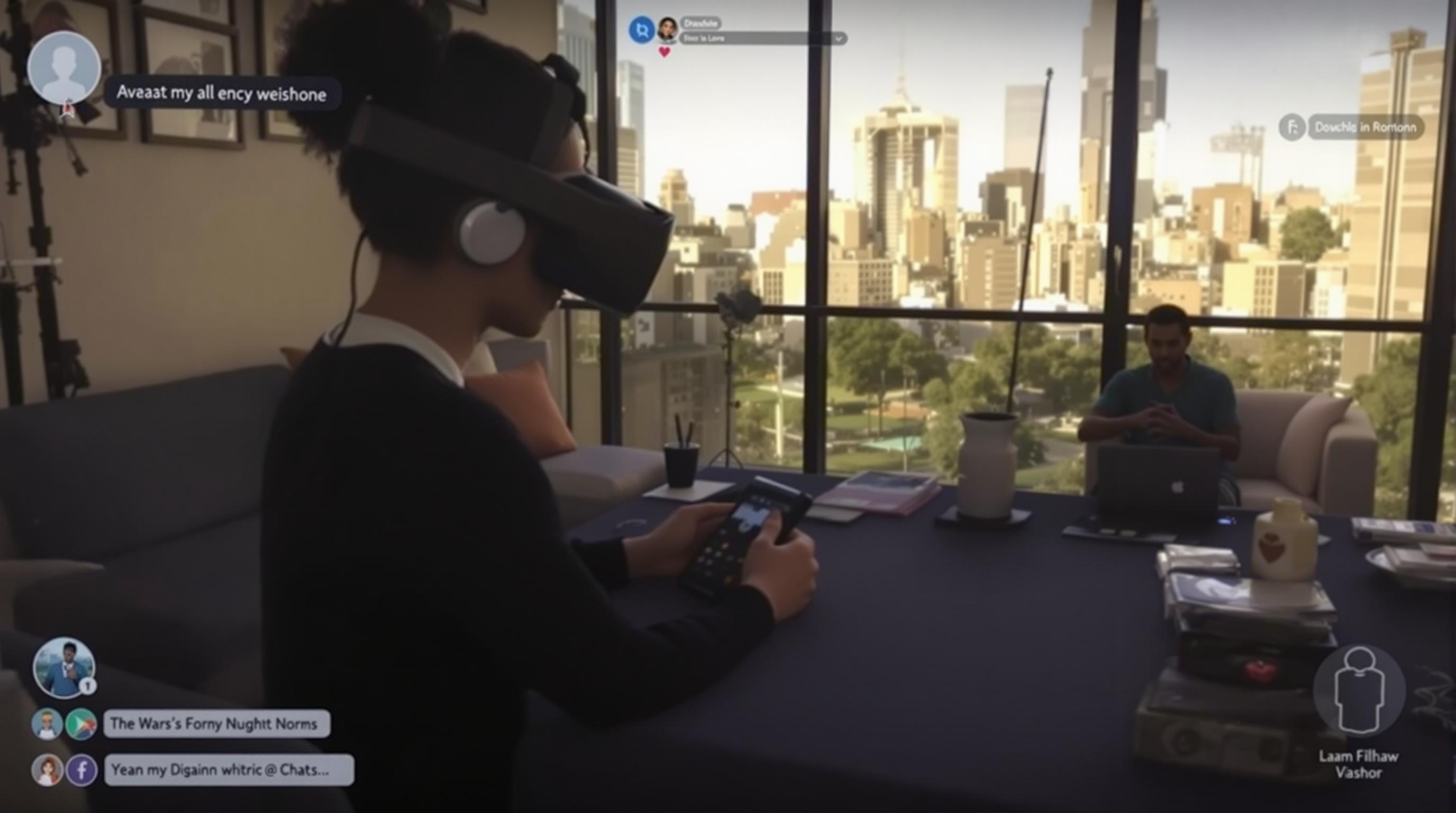
The Rise of Virtual Reality Chit-Chat: Can Avatar Conversations Redefine Our Social Norms?
The Rise of Virtual Reality Chit-Chat: Can Avatar Conversations Redefine Our Social Norms?
The emergence of virtual reality (VR) technology has brought forth a novel medium for social interaction through avatar conversations, prompting us to rethink our established social norms. As people transition into virtual spaces, the implications for communication, relationships, and identity take on a new dimension that could redefine interpersonal connections across a wide spectrum of experiences and cultures.
A New Reality Awaits
Picture this: you put on a VR headset and suddenly, you’re no longer in your living room. You’re on a digital moon colony sipping space coffee with friends from across the globe. The advent of VR technology allows us to connect in ways we might have never imagined, fostering social interactions that, while rooted in the digital realm, feel profoundly real.
The Statistics Speak
According to a recent report by the International Data Corporation (IDC), the global VR market is expected to exceed $200 billion by 2023, with social interaction being one of the primary drivers of that growth (IDC, 2020). The VR landscape is burgeoning, and the platforms that facilitate avatar conversations, like VRChat and AltspaceVR, are leading the pack in revolutionizing how we connect.
A Journey through Digital Conversations
Let’s take a moment to reflect on how we communicate today. Over the last decade, we've shifted from face-to-face interactions to digital conversations, navigating platforms like texting, video calls, and social media. Now, with the rise of VR, we’re moving toward a form of interaction that embodies presence and personality through avatars. These avatars become extensions of ourselves, allowing for playful expressions or complete transformations that could evoke the creativity trapped within the mundane.
The Shift in Identity
As avatars become our social representations, could this lead to a more liberated view of identity? Individuals often embrace diverse personas in virtual environments, allowing them to explore aspects of their identity that they might not feel comfortable revealing in the physical world. For some users, this exploration fosters confidence and self-awareness, breaking down barriers that exist in traditional social settings.
A Case Study: An Avatar Testimony
Meet Jane—a 25-year-old graphic designer from New York, who decided to explore VRChat after feeling isolated during the pandemic. “In the real world, I struggle with social anxiety. But when I’m in the VR space and I become my avatar, I feel free to express myself without fear of judgment,” she shares. Jane’s experience mirrors that of many who use avatars as a shield against real-world vulnerabilities, suggesting that this new form of communication might enable deeper connections than those formed in traditional avenues.
The Positive and the Perilous
While there are indeed benefits to avatar-based conversations, we must also tread carefully. The digital connections we forge can sometimes skirt complex social dynamics. For example, anonymity in VR can lead to conflicts and misunderstandings, as observably seen in the toxic behavior that can emerge in some online gaming communities. How can we regulate behavior in these immersive environments while still allowing users the freedom to express themselves?
The Humor of Digital Socializing
Let’s face it—social interactions in VR can sometimes veer into bizarre territory. Ever had a conversation with a talking potato avatar? You’d be surprised at how often it happens! These amusing encounters tend to break the ice and add layers of hilarity to socializing in VR, making chatting feel less stressful and more like a rollicking adventure, especially when you’re rocking an ‘80s neon tracksuit!
Building Community in the Digital Age
Socializing in VR has showcased a unique communal spirit. A study conducted by Stanford University found that people participating in VR social activities reported a higher level of connection with others compared to traditional online interactions (Stanford VR Lab, 2020). Communities are springing up around shared interests, hobbies, and experiences, offering a rich tapestry of connections that transcend geographical boundaries.
Beyond Just Social Interaction
But the benefits of virtual chit-chat transcend mere social connection. Businesses are beginning to explore how VR can foster collaboration and creativity among teams. Companies such as Facebook and Microsoft have launched platforms that allow employees to brainstorm and collaborate in virtual environments, proving that the potential applications of VR extend far beyond leisure.
The Case for Workplace Transformation
Consider a team meeting where participants are represented by their avatars. The level of engagement can skyrocket as employees are free to express themselves visually and interactively. According to a survey by the VR/AR Association, 71% of respondents felt that virtual meetings increased team collaboration and engagement (VR/AR Association, 2022). Could it redefine how we gather and communicate in professional settings forever? The answer is a resounding yes.
Generational Perspectives on VR Socializing
Interestingly, attitudes toward VR are often influenced by age. Younger generations, having grown up with technology surgeries and social media, tend to embrace avatar-based conversations more readily than older adults. However, the latter group isn’t completely opposed to the idea. For instance, when we spoke to Robert, a 65-year-old retired teacher, he expressed curiosity about VR. “I’ve seen how my grandkids interact in those spaces, and it looks so interesting. Yet, I’m concerned about the kind of people they might meet,” he noted. This encapsulates the tension between innovation and apprehension in societal norms.
Toward Policy Development
For our society to truly benefit from these innovations, we need to establish social norms around avatar conversations. This includes drafting guidelines that promote respect, tolerance, and understanding within virtual environments. Organizations and developers must play an essential role in shaping the ethical use of avatars and creating safe spaces where users feel secure to express their identities. As such, institutions may need to explore options for user education and community standards.
An Invitation to Explore
As we stand on the cusp of a new era in communication, the question arises: are we ready for this virtual adventure? The next time you see a headline about VR, don’t dismiss it as mere gimmickry. Dive deeper into the world of avatar conversations and consider how they can redefine your own social experiences. Whether you're a social butterfly or a wallflower, there’s something magical about stepping into another world, even if it’s via a computer screen. The age of avatar chit-chat invites us all on a journey toward exploration and discovery.
The Future Awaits
As we navigate this new front, the implications of avatar conversations touch on various aspects of our lives—from personal interaction to professional collaboration, identity exploration, and community building. VR technology holds the promise of offering a unique blend of belonging and openness, all while challenging our traditional views of social norms.
Worlds without Boundaries
The boundaries we once grappled with in our social lives may soon fade in the expansive realms of virtual interaction. In a world where availability is as close as a click away, we find ourselves at the precipice of a significant evolution in how we engage—with others, with ourselves, and with the world at large. As we step into this brave new world, remember: the avatars we choose may shape not only our conversations but the very fabric of our social existence.
Read More